
Perseverance with Math Puzzles: Building Grit & Number Sense
5 Fun Math Puzzles for Kids to Build Perseverance & Focus When my 8-year-old son brought home his math homework
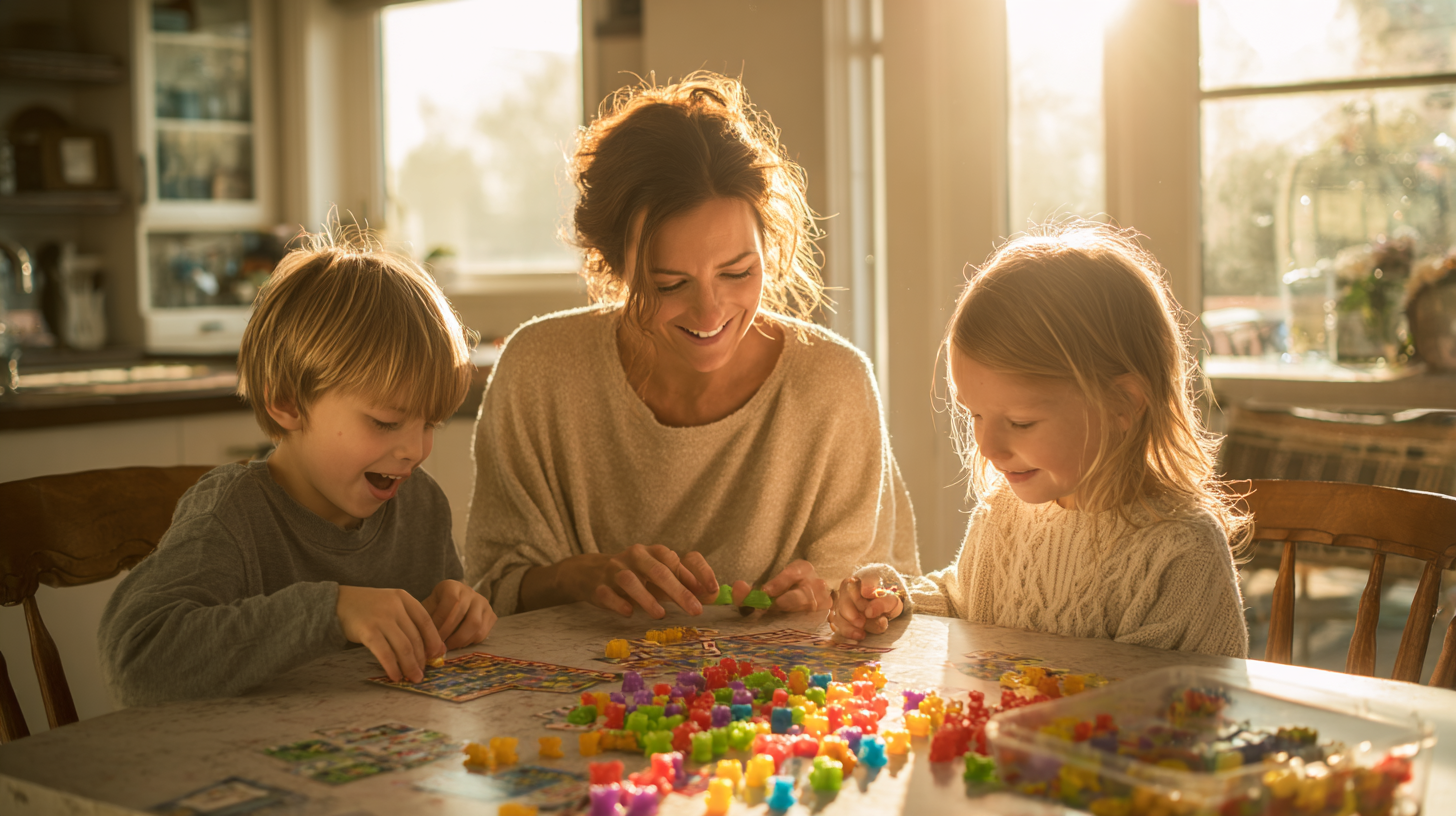
“Mom, can we play the finger game again?” My 4-year-old daughter Emma asked yesterday while we waited for her brother’s soccer practice to end. She was referring to our favorite make 10 activities that have become such a natural part of our daily routine. As a former middle and high school math teacher who now stays home with my 8-year-old son Jake and Emma, I’ve discovered that make 10 activities are absolutely magical for building number sense and mathematical confidence in children of all ages.
These simple mathematical games have transformed our car rides, waiting times, and even grocery shopping trips into valuable learning opportunities that my children genuinely request and enjoy. Make 10 activities work so beautifully because they’re based on one of the most fundamental mathematical concepts that children need to master – understanding how numbers combine to create ten, which forms the foundation for all future mathematical learning and mental math strategies.
Do you ever struggle to find engaging math activities that don’t require special materials or complicated setup? The beauty of make 10 activities lies in their incredible simplicity and versatility – you can play them anywhere, anytime, using just your fingers, everyday objects, or simple mental math challenges that keep children engaged and learning naturally.
Over the past three years of implementing these strategies consistently, I’ve watched both my children develop remarkable mental math abilities, automatic number recognition, and genuine enthusiasm for mathematical thinking. Jake now automatically looks for combinations that make ten in everything from license plates to house numbers, while Emma confidently manipulates numbers in her head during our daily make 10 activities.
The foundation of successful make 10 activities begins with children’s most accessible and natural mathematical tools – their own hands and fingers. I’ve developed a comprehensive collection of finger-based games that make abstract mathematical concepts concrete and physically engaging for children who learn best through movement and touch.
Our most beloved finger game involves showing various numbers on one hand while challenging children to display the remaining amount on their other hand to make ten total. “I’m showing 7 fingers – how many do you need to show to make 10 altogether?” This simple activity reinforces the concept that ten can be composed of many different number combinations while providing immediate visual and tactile feedback.
We’ve created progressive finger challenges that grow with children’s developing mathematical abilities and confidence levels. Beginning with easy combinations like 5+5 or 9+1, we gradually introduce more complex pairings like 6+4 or 3+7. The physical manipulation of fingers helps children internalize these mathematical relationships in ways that pure memorization cannot achieve.
Emma particularly loves our “mystery finger” games where I hide some fingers behind my back and challenge her to figure out the hidden amount. “I have 10 fingers total, and you can see 6 of them. How many are hiding?” These engaging activities develop logical reasoning skills while reinforcing make 10 activities in playful, non-threatening ways.
Our finger games extend beyond simple addition to include storytelling elements that capture children’s imagination and maintain their interest. “Five little monkeys were swinging in the tree, and 5 more monkeys came to play. How many monkeys are swinging now?” This narrative approach makes make 10 activities feel like entertainment rather than instruction.
The versatility of finger-based make 10 activities makes them perfect for any location or situation. We play during car rides, while waiting in doctor’s offices, during bath time, and even as a calming activity before bedtime. This consistency helps children see mathematics as a natural, enjoyable part of daily life rather than a formal academic subject.
💡 Teacher Mom Tip: Start with your child’s dominant hand showing numbers 1-5, then use the other hand to complete ten. This visual separation helps children understand the concept of “parts and whole” that’s essential for mathematical thinking and problem-solving strategies.
Transform ordinary snack time into extraordinary mathematical learning opportunities through creative make 10 activities that combine nutrition with education. Our kitchen has become a mathematical laboratory where goldfish crackers, grapes, cheerios, and other finger foods serve as engaging manipulatives for hands-on learning experiences that children remember and request repeatedly.
Our systematic approach involves giving children exactly ten small snacks arranged on a plate, then encouraging them to explore different ways to divide, group, and recombine these items into various mathematical combinations. “You have 10 grapes total. Can you put some in this bowl and some in that bowl? How many different ways can you split them up?” This practical application makes make 10 activities feel natural and purposeful.
We’ve developed progressive snack-based challenges that accommodate different developmental levels and mathematical abilities. Younger children might simply practice separating ten items into two groups, while older children can explore multiple combinations, create patterns, or even develop their own mathematical games using the same basic materials and concepts.
Jake has become incredibly creative with our food-based make 10 activities, inventing elaborate scenarios where crackers become soldiers, grapes transform into planets, and cheerios represent wheels on imaginary vehicles. This imaginative play approach keeps mathematical learning engaging while reinforcing essential number concepts through storytelling and creative thinking.
Our snack time mathematical adventures naturally extend into discussions about nutrition, portion control, and practical life skills. “If you eat 3 grapes now, how many will you have left for after dinner?” These real-world applications help children understand that mathematics is a valuable tool for making decisions and solving everyday problems they encounter.
Do you find that your children are more engaged with learning activities when they involve food or treats? I’ve discovered that the combination of tactile manipulation, visual organization, and the eventual reward of eating the “manipulatives” creates incredibly powerful motivation for sustained mathematical engagement and learning.
The preparation time for these make 10 activities is minimal, but the educational impact is substantial and long-lasting. Simply counting out ten small snacks provides multiple learning opportunities – counting practice, one-to-one correspondence, number recognition, and the foundational understanding that groups of objects can be organized and reorganized in multiple meaningful ways.
💡 Teacher Mom Tip: Use different types of snacks to create more complex make 10 activities. “You have 6 crackers and 4 grapes. That’s 10 snacks total! Can you make different combinations using both types of food?” This multi-variable approach develops more sophisticated mathematical thinking and problem-solving skills.
Traditional playing cards and simple paper activities provide endless opportunities for engaging make 10 activities that can be adapted for various skill levels and learning preferences. Our family has developed a collection of card-based mathematical games that combine strategy, luck, and number recognition into entertaining activities that children eagerly anticipate and request regularly.
Our foundational card game involves removing face cards from a standard deck, leaving only cards numbered 1-10. Children draw two cards and determine whether they can combine them to make ten, developing rapid number recognition and mental addition skills. “You drew a 7 and a 3 – do those make 10? How do you know?” This immediate feedback helps reinforce mathematical concepts through repeated practice and success experiences.
We’ve created progressive card challenges that grow with children’s developing mathematical abilities and confidence levels. Beginning with simple two-card combinations, we advance to three-card challenges, then introduce subtraction concepts where children start with cards totaling more than ten and remove cards to reach exactly ten.
Emma particularly enjoys our “make 10 race” where we compete to see who can find combinations fastest, but we’ve learned to emphasize accuracy over speed to build confidence rather than anxiety. These competitive elements add excitement while maintaining focus on mathematical learning and skill development rather than pure competition.
Paper-based make 10 activities offer additional versatility and creativity for children who enjoy drawing, writing, and visual organization. We create simple worksheets with ten empty circles that children can color, dot, or fill with stickers in various combinations. “Color 6 circles red and 4 circles blue to make 10 total circles!” This visual representation strengthens understanding of number relationships and mathematical concepts.
Our homemade domino games using paper cards with dot patterns provide excellent make 10 activities that combine visual pattern recognition with mathematical thinking. Children match dominoes whose dots combine to equal ten, developing both counting skills and strategic thinking abilities through engaging gameplay.
Have you noticed how children often prefer games and activities that feel like play rather than structured learning? Our card and paper-based make 10 activities succeed because they disguise mathematical instruction as entertainment, allowing children to develop essential skills while having genuine fun and building positive associations with mathematics.
💡 Teacher Mom Tip: Create a special “make 10 card deck” by writing equations on index cards (6+4, 7+3, 8+2, etc.) and having children solve them during car rides or waiting times. This portable activity provides consistent mathematical practice in various environments and situations.
Fresh air and physical movement create powerful learning opportunities through active make 10 activities that engage children’s whole bodies while reinforcing essential mathematical concepts. Our backyard and local playground have become outdoor classrooms where mathematical learning happens naturally through games, exploration, and physical challenges that children love.
Our most popular outdoor make 10 activities involve collecting natural materials like rocks, leaves, acorns, or flowers, then arranging them into various combinations that total ten. “Find 10 beautiful leaves, then show me different ways to group them!” This nature-based approach combines mathematical learning with outdoor exploration, environmental awareness, and hands-on discovery that appeals to kinesthetic learners.
Hopscotch becomes an excellent vehicle for make 10 activities when we modify the traditional game to include mathematical challenges. Children hop to different numbered squares and must call out the number needed to make ten with their current position. “You’re on square 6 – what number do you need to make 10?” This movement-based learning helps children internalize number relationships through physical experience and repetition.
Jake loves our “make 10 scavenger hunt” where we search for objects that can be combined into groups of ten – 4 dandelions plus 6 daisies, 7 smooth rocks plus 3 rough rocks, or 2 red leaves plus 8 green leaves. These real-world applications make make 10 activities feel relevant and meaningful while developing observation skills and mathematical thinking simultaneously.
Our sidewalk chalk activities transform ordinary pavement into colorful mathematical canvases where children can draw number bonds, create hopscotch grids, or design their own make 10 activities games. “Draw 10 circles, then color them in different combinations to show various ways to make ten!” This artistic approach appeals to creative children while reinforcing essential mathematical concepts through visual representation.
Physical exercise games incorporate make 10 activities through counting movements and combining different types of actions. “Do 6 jumping jacks and 4 toe touches to make 10 exercises total!” This approach helps children understand that mathematics applies to all areas of life, including health, fitness, and physical coordination.
Do you find that your children have more energy and enthusiasm for learning when activities happen outdoors? The combination of fresh air, physical movement, and hands-on exploration creates ideal conditions for mathematical learning that feels natural and enjoyable rather than forced or academic.
💡 Teacher Mom Tip: Create permanent outdoor make 10 activities stations using chalk paint on concrete or fence surfaces. Draw ten circles, squares, or other shapes that children can fill with natural materials in different combinations throughout the seasons, providing consistent learning opportunities in your outdoor space.
Modern technology offers exciting opportunities to enhance traditional make 10 activities with interactive digital experiences that appeal to tech-savvy children while maintaining focus on fundamental mathematical skill development. Our carefully selected apps and digital tools provide additional practice opportunities that complement rather than replace hands-on learning experiences and human interaction.
Our tablet contains several high-quality educational apps specifically designed around make 10 activities and number bond concepts. These digital tools provide immediate feedback, adaptive difficulty levels, and engaging visual presentations that hold children’s attention while reinforcing mathematical learning. “The app shows 7 dots – touch the screen to add enough dots to make 10 total!” This interactive feedback helps children understand mathematical concepts through multiple sensory channels and learning modalities.
We’ve established clear boundaries and time limits for digital make 10 activities to ensure that technology enhances rather than dominates our mathematical learning experiences. Screen time becomes a special reward for completing hands-on activities, maintaining balance between digital and traditional learning approaches while building healthy technology habits.
Emma particularly enjoys apps that allow her to create her own make 10 activities challenges and share them with family members. This creative element transforms passive consumption into active mathematical thinking and problem-solving while developing digital literacy skills alongside numerical competency and mathematical reasoning abilities.
Our digital photography projects involve taking pictures of real-world make 10 activities combinations, then creating digital albums or presentations to share with grandparents and extended family members. “Take a picture of your 4 toy cars and 6 toy trucks to show Grandma how you made 10 vehicles!” This documentation approach helps children see their mathematical achievements and builds pride in their learning accomplishments.
Simple online games and interactive websites provide additional make 10 activities practice during indoor time, especially during bad weather or when children need quiet, focused activities. We preview all digital content together and discuss mathematical concepts before, during, and after screen time to maximize educational value and ensure meaningful learning experiences.
Have you found that educational technology can enhance your children’s mathematical learning when used thoughtfully and in moderation? The key is selecting high-quality digital tools that align with your educational goals while maintaining emphasis on hands-on exploration, family interaction, and real-world application of mathematical concepts and skills.
👉 More daily math play ideas here for discovering additional ways to integrate technology meaningfully into your family’s mathematical learning routine.
💡 Teacher Mom Tip: Use your phone’s camera to document your child’s make 10 activities creations throughout the week, then review the photos together on weekends. This digital portfolio approach helps children see their mathematical growth over time while creating lasting memories of learning adventures and achievements.
The transformative power of consistent make 10 activities extends far beyond simple number recognition and basic addition skills. These foundational mathematical experiences create confident, curious learners who approach numbers with enthusiasm rather than anxiety or fear. My children now see mathematical challenges as interesting puzzles to solve rather than obstacles to overcome or avoid.
This educational approach succeeds because it feels natural and integrated into daily family life rather than forced or artificially structured. Children don’t resist learning when mathematical concepts emerge organically from play, exploration, and genuine curiosity about the world around them. Make 10 activities provide countless opportunities for mathematical thinking without feeling like formal instruction or academic pressure.
The mathematical conversations we have throughout the day about number combinations, patterns, and problem-solving strategies have strengthened both children’s analytical thinking skills and their confidence in their own mathematical abilities. Jake frequently shares our make 10 activities games with classmates and teachers, demonstrating the mathematical concepts he’s internalized through consistent, playful practice and exploration.
Even more significantly for long-term academic success, both children have developed positive associations with mathematics as a subject and as a practical life skill. They understand that numbers are tools for understanding patterns, solving problems, and making sense of the world rather than abstract concepts to memorize for tests or assignments.
The collaborative nature of our make 10 activities has strengthened family relationships and created shared learning experiences that we all genuinely enjoy and anticipate. Mathematics has become a bonding activity rather than a source of homework stress or academic pressure, creating lasting positive associations with learning and intellectual curiosity.
👉 More daily math play ideas here to continue building mathematical confidence through everyday family activities and routine moments.
Our make 10 activities have also improved both children’s problem-solving abilities, logical reasoning skills, and creative thinking patterns. These transferable skills positively impact their performance in reading comprehension, science exploration, and critical thinking across all academic subjects and real-world situations they encounter.
Have you begun to see how simple, consistent mathematical activities can create lasting confidence and genuine enthusiasm for learning? The key is maintaining regularity, following children’s natural interests and curiosity, and celebrating mathematical thinking rather than focusing solely on correct answers or academic performance measures.
Transform everyday moments into mathematical adventures that build lifelong confidence and love for learning! Start with just one simple make 10 activities game tomorrow – your children’s mathematical journey toward confidence and success begins with small, consistent steps taken together as a family.
👉 More daily math play ideas here to discover dozens of additional routine-based learning opportunities that make mathematics feel as natural and enjoyable as playing with favorite toys. Your children’s mathematical confidence is waiting to flourish with loving support and consistent, playful practice!
What age is most appropriate for beginning make 10 activities with children?
Children as young as 3 can participate meaningfully in simple make 10 activities using fingers, toys, or snacks, while elementary-age children can handle more complex variations involving multiple steps, strategy games, and creative problem-solving challenges. The key is thoughtfully adapting activities to match your individual child’s developmental level, attention span, and mathematical readiness while maintaining consistent daily practice that builds confidence over time.
How can I tell if make 10 activities are helping my child’s mathematical development?
Look for signs like automatic finger counting when solving problems, spontaneous recognition of number combinations in daily life, increased confidence with basic addition and subtraction, and most importantly, genuine enthusiasm for mathematical games and challenges. Children who regularly engage in make 10 activities typically develop stronger mental math abilities, faster number recognition, and more flexible mathematical thinking that transfers to other academic areas and real-world problem-solving situations.
What if my child loses interest in make 10 activities or finds them too difficult?
Simplify the activities by using fewer objects, providing more physical support, or incorporating your child’s special interests and favorite themes into the mathematical games. If a child loves dinosaurs, use toy dinosaurs for counting and grouping activities. If they enjoy art, incorporate drawing and coloring into make 10 activities. The key is following your child’s natural curiosity and interests rather than forcing mathematical concepts through activities that feel boring or overwhelming to their individual learning style and preferences.
5 Fun Math Puzzles for Kids to Build Perseverance & Focus When my 8-year-old son brought home his math homework

Reduce Math Anxiety with Humor: Fun Tips for Parents and Kids I still remember the day my eight-year-old son threw

Sibling Math Rivalry: How Competition Can Spark Learning “Mom, she got more problems right than me!” If this sounds familiar,
*Also read:
25 Brilliant LEGO Math Activities to Build Number Sense and STEM Skills at Home
Teach Kids to Tell Time: The Clock Game Every Parent Should Try at Home