


Finger Math Strategies: Hands-On Ways Kids Learn Numbers
Finger Math Strategies: Hands-On Ways Kids Learn Numbers When my 8-year-old son was in kindergarten, I watched him struggle with


Have you ever watched your child race against time during daily routines and thought, “What if we could turn this energy into learning?” As a former middle and high school math teacher who now chases around my 8-year-old son and 4-year-old daughter, I’ve discovered something amazing: kitchen timer math challenges aren’t just about numbers—they’re about transforming everyday moments into exciting learning adventures. When my daughter started counting down from 10 while brushing her teeth last month, I realized we were sitting on a goldmine of educational opportunities. These kitchen timer math challenges have become our secret weapon for making math feel less like work and more like play.
The beauty of timer-based learning lies in its simplicity. You probably already use timers for homework sessions, screen time, or getting ready for school. But what if I told you these same moments could be building your child’s number sense, mental math skills, and problem-solving abilities without them even realizing it?
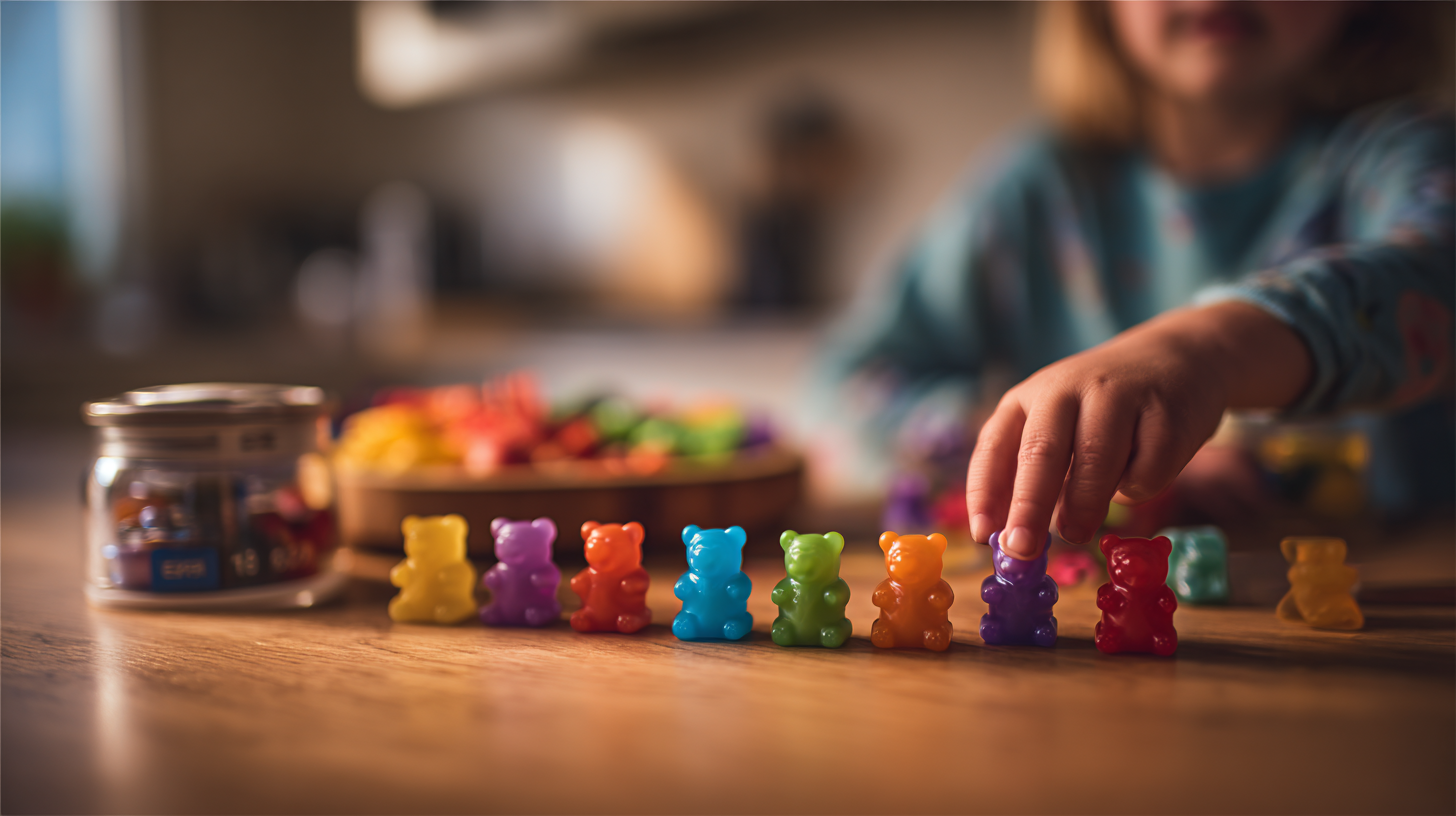
Starting the day with purposeful timer challenges sets a positive tone for learning. I’ve found that incorporating math into our morning rush actually makes everything smoother—and more fun.
My favorite morning kitchen timer math challenges begin with simple countdown scenarios. While my son brushes his teeth for two minutes, we practice skip counting by twos, fives, or tens. “Can you count by fives until the timer goes off?” transforms a mundane task into an engaging brain exercise.
For getting dressed, we create estimation games: “How many seconds do you think it takes to put on your socks?” Then we time it and compare our guesses to reality. This builds number sense and introduces basic concepts of time measurement.
💡 Teacher Mom Tip: Start with 30-second challenges for younger kids, then gradually increase to 2-3 minutes as they build confidence and attention span.
The kitchen naturally becomes our math laboratory during snack preparation. These moments offer rich opportunities for hands-on learning that feels completely natural.
Division becomes tangible when we’re portioning crackers or cutting fruit. “We have 12 grapes and 3 minutes—can you divide them equally into groups before the timer rings?” Suddenly, abstract math concepts have real-world meaning.
Multiplication tables come alive through repeated addition during food prep. While making trail mix, we count scoops: “Three scoops of raisins, three scoops of nuts—that’s 3 plus 3, or 3 times 2!”
Do you ever notice how focused kids become when there’s a gentle time pressure? The kitchen timer math challenges create just enough urgency to keep them engaged without causing stress.
💡 Teacher Mom Tip: Use clear containers so children can visualize quantities while solving problems—seeing the math makes abstract concepts concrete.
Cleaning up doesn’t have to be a chore when you add mathematical thinking to the mix. Our post-meal cleanup has become one of our most successful kitchen timer math challenges.
We turn toy organization into sorting and categorization practice. “Can you group all the blocks by color in under 90 seconds?” This develops logical thinking while reinforcing basic math concepts like classification and comparison.
Counting games make tidying feel like play. “Let’s see if we can pick up exactly 20 items before the timer goes off!” The competitive element keeps motivation high while reinforcing number recognition and one-to-one correspondence.
💡 Teacher Mom Tip: Create “math cleanup” playlists with 2-3 minute songs—kids love racing against their favorite tunes while practicing math skills.
Traditional homework time can benefit enormously from strategic timer use, especially when we frame it as solving kitchen timer math challenges rather than just “doing math.”
Break larger assignments into smaller, timed chunks. “Let’s solve five addition problems in three minutes, then take a movement break.” This prevents overwhelm while building computational fluency.
For word problems, use timers to encourage careful reading: “Take 60 seconds to read this problem twice and underline the important numbers.” This teaches problem-solving strategies while maintaining engagement.
Ask your child: “How many math problems do you think you can solve accurately in 10 minutes?” Self-prediction develops metacognitive skills while making homework feel more like a personal challenge than an obligation.
💡 Teacher Mom Tip: 👉 More daily math play ideas here—celebrate effort over speed to build confidence and reduce math anxiety.
Ending the day with gentle kitchen timer math challenges helps reinforce learning while maintaining our cozy bedtime routine.
Story problems become interactive when we add timer elements: “The three little pigs had 5 minutes to build their houses—if each pig worked for the same amount of time, how long did each pig work?”
Counting sheep takes on new meaning when we practice skip counting or simple patterns. “Let’s count by twos until the timer reaches one minute—how high can we get?”
💡 Teacher Mom Tip: Keep bedtime math challenges calm and success-oriented—this isn’t the time for difficult problems, but rather for reinforcing concepts in a peaceful way.
The most powerful aspect of kitchen timer math challenges isn’t just the learning—it’s the relationship building that happens when we approach math as a team sport rather than a solitary struggle.
These timer-based activities have taught me that math anxiety often stems from feeling pressured to perform rather than encouraged to explore. When we frame mathematical thinking as problem-solving adventures with gentle time boundaries, children develop confidence naturally.
Remember, the goal isn’t perfection—it’s progress. Some days our kitchen timer math challenges flow beautifully, other days we barely manage to count to ten without someone needing a snack or bathroom break. That’s real life, and that’s perfectly okay.
Start small, stay consistent, and watch as your child begins to see math as something exciting rather than something to endure. 👉 More daily math play ideas here to keep the learning momentum going strong.
The timer isn’t just measuring minutes—it’s measuring the growth of a confident, capable mathematical thinker.
Ready to transform your daily routines into powerful learning moments? Download our free “Quick Timer Math Games” guide and discover 25+ activities that turn any ordinary day into an extraordinary math adventure—your kids will be begging for more math time by tomorrow!
Q: What’s the ideal duration for kitchen timer math challenges with young children? A: Start with 30-60 second challenges for preschoolers and 2-3 minutes for elementary age children. The key is keeping activities short enough to maintain engagement while long enough to complete meaningful math practice.
Q: How do I prevent kitchen timer math challenges from creating anxiety instead of fun? A: Focus on effort over accuracy, celebrate attempts rather than just correct answers, and always frame activities as games rather than tests. If your child seems stressed, reduce the time pressure or eliminate competition elements entirely.
Q: Can kitchen timer math challenges work for children with different math abilities? A: Absolutely! The beauty of timer-based activities is their flexibility. Adjust problem difficulty, time limits, and expectations based on each child’s developmental level. Siblings can participate in the same activity with age-appropriate modifications.

Finger Math Strategies: Hands-On Ways Kids Learn Numbers When my 8-year-old son was in kindergarten, I watched him struggle with

Make 10 Activities: Simple Math Games Kids Enjoy Daily “Mom, can we play the finger game again?” My 4-year-old daughter

Roll-and-Add Challenges: 5 Fun Math Games Kids Love You know what’s funny? I taught high school math for fifteen years,
*Also read:
25 Brilliant LEGO Math Activities to Build Number Sense and STEM Skills at Home
Teach Kids to Tell Time: The Clock Game Every Parent Should Try at Home