
Domino Subtraction Activity: Fun Math Practice for Kids
Domino Subtraction Activity: Fun Math Practice for Kids It was a rainy Tuesday afternoon when my 8-year-old son dumped our

When my 8-year-old son was in kindergarten, I watched him struggle with basic addition during homework time. As a former middle and high school math teacher, I felt this wave of panic—shouldn’t this be easier? Then I noticed something: whenever he got stuck, his little fingers would start twitching under the table. He was trying to count, but he’d been told fingers were “babyish.” That moment changed everything for me. I realized that finger math strategies aren’t just acceptable—they’re actually one of the most powerful tools for building number sense in young children. Now, with my 4-year-old daughter naturally using her fingers to explore counting, I’ve fully embraced these hands-on techniques, and I want to share why finger math strategies have become a cornerstone of our daily learning at home.
Do you ever wonder if you’re helping your child build a strong math foundation, or just getting through the homework? Let me walk you through what I’ve learned, both as a teacher and as a mom navigating early math with two very different learners.
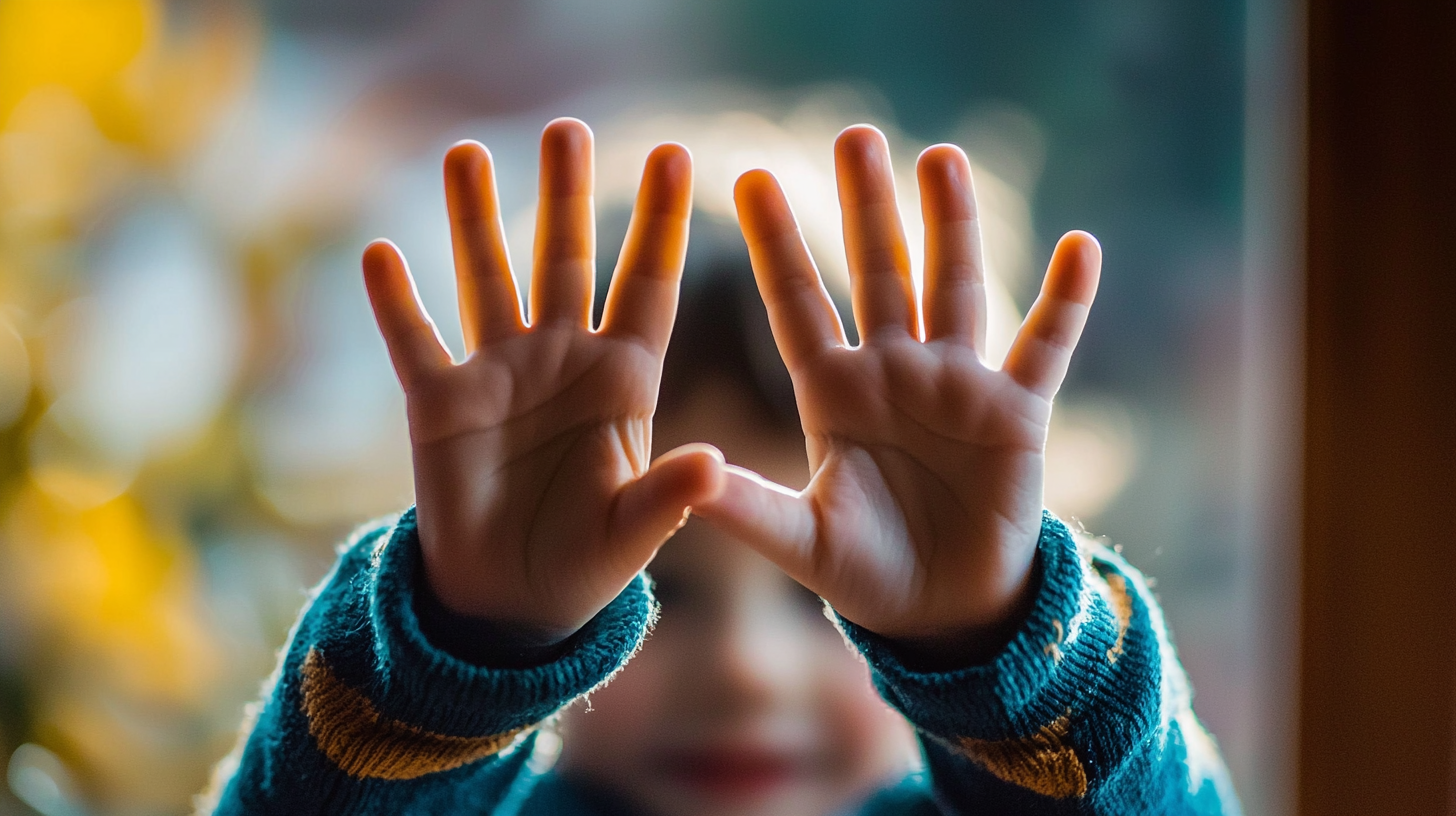
Here’s what surprised me most when I started researching this topic: neuroscience actually supports finger counting. Studies show that the part of our brain responsible for finger sensation (the somatosensory cortex) is right next to the area that processes numbers. When children use finger math strategies, they’re literally creating neural pathways that connect physical movement with mathematical thinking.
I remember one afternoon when my daughter was helping me set the table. She counted out four forks, one finger at a time, then looked at her hand and said, “Mommy, four looks like this!” She was holding up four fingers with such pride. That’s when I realized: she wasn’t just counting objects—she was building a mental image of what “four” means. This is exactly what finger math strategies do so beautifully.
The tactile experience gives kids a concrete reference point. When my son now solves 7 + 5, he doesn’t just see abstract symbols on paper. He can feel the answer in his hands. He starts with seven fingers up, then counts on five more, touching each finger deliberately. This multi-sensory approach—seeing, touching, and moving—creates stronger memory pathways than visual learning alone.
What I love most is that finger math strategies meet children exactly where they are developmentally. Young kids are naturally kinesthetic learners. They need to move, touch, and manipulate to understand. Fighting against this natural tendency made homework a battle in our house. Embracing it transformed our learning time into something joyful.
💡 Teacher Mom Tip: Never discourage your child from using their fingers, no matter their age. If they’re reaching for this tool, their brain is telling them they need that concrete support. The goal isn’t to eliminate finger counting—it’s to make it more efficient and sophisticated over time.
Let me share the progression I’ve used with both my kids, starting from the very beginning. With my daughter at four, we’re in the early stages, while my son has moved into more advanced techniques. This journey shows how finger math strategies evolve naturally.
We started with the most basic approach: the “counting all” method. When I asked my daughter to solve 3 + 2, she’d put up three fingers on one hand, two on the other, then count all five fingers from one. This seems simple, but it’s teaching her that addition means combining groups. I never rushed her past this stage.
As my son got older, we moved to “counting on”—a game-changer for efficiency. Instead of counting all the fingers from one, he’d start with the larger number in his head and count up from there. For 7 + 4, he’d think “seven” and then raise four fingers, counting “eight, nine, ten, eleven” as he touched each finger. This strategy dramatically reduced his calculation time and felt like a real breakthrough moment.
For subtraction, we use what I call the “take away” method. When solving 8 – 3, my son puts up eight fingers, then folds down three while counting backward. He can see the answer remaining in his raised fingers. This visual representation makes subtraction—which is often trickier than addition—much more concrete.
Here’s a strategy that surprised me with its effectiveness: the “make ten” finger method. Our hands naturally have ten fingers, which makes them perfect for understanding this crucial math concept. When my son needs to solve 8 + 5, we first make ten using his eight fingers and two from the other hand. Then he sees three fingers left over, so the answer is 13. This strategy builds the foundation for mental math later on.
I also teach what I call “finger patterns” for quick recognition. Instead of counting one-by-one, we practice showing numbers in standard patterns. Five is always one full hand. Seven is a full hand plus two fingers on the other hand. These patterns become automatic, just like recognizing dot patterns on dice.
💡 Teacher Mom Tip: Make a game of showing numbers different ways. Ask your child, “Can you show me 6 using different fingers?” This builds flexibility in their thinking and shows them that numbers can be decomposed and recomposed—a critical concept for algebraic thinking later.
When my son’s teacher introduced multiplication in second grade, I saw that familiar panic return to his face. But I remembered something from my teaching years: multiplication is just repeated addition, and fingers can handle that beautifully. That’s when we developed our own finger math strategies for early multiplication.
The simplest method we use is skip counting on fingers. For the 2s table, my son counts by twos while touching each finger: “2, 4, 6, 8, 10” as he goes through all ten fingers. This rhythm becomes almost musical, and I’ll catch him doing it absentmindedly while waiting in line at the grocery store. The physical touch reinforces the counting pattern in a way that just saying the numbers doesn’t.
For the 5s table, we use what I call the “high-five method.” Each hand represents five. When he needs to solve 5 × 3, he mentally “counts” three hands: 5, 10, 15. We pretend to high-five three times, and each high-five is worth five. This makes perfect sense because our hands are naturally divided into fives.
The finger method for 9s table is actually an old trick that still amazes kids (and many adults!). To multiply 9 × 4, you hold up all ten fingers and fold down the fourth finger from the left. The fingers before the folded finger (3) represent the tens place, and the fingers after (6) represent the ones place. The answer is 36. My son thought this was actual magic when I first showed him, and now he shows it to all his friends.
We also use fingers for understanding arrays and groups. When I ask my son to show me “3 groups of 4,” he’ll create three distinct groups using his fingers: four fingers on one hand, four on the other, and then four again (using the same fingers but in a second “round”). This helps him visualize that 3 × 4 means “three groups of four,” not just a random math problem.
What I appreciate most about these finger math strategies for multiplication is that they prevent memorization without understanding. My son isn’t just reciting facts—he’s building a conceptual framework for what multiplication actually means.
💡 Teacher Mom Tip: Don’t rush to eliminate these physical strategies even when your child starts memorizing multiplication facts. Having the finger method as a backup builds confidence and reduces math anxiety. I still see my son check himself with his fingers sometimes, and that’s perfectly okay.
I’d be lying if I said our finger math journey has been completely smooth. Both my kids have hit roadblocks, and I’ve learned how to work through them. Let me share the most common challenges I’ve seen—both at home and in my years teaching.
The biggest issue parents worry about is dependency. “Won’t my child always need their fingers?” I hear this concern all the time. Here’s what I’ve learned: finger math strategies are a bridge, not a crutch. My son used his fingers heavily in kindergarten and first grade, and now in third grade, he uses them occasionally—mostly for checking his work or when he’s tired. The fingers provided security while his mental math skills developed naturally in the background.
Some children struggle with the physical coordination of finger counting. My daughter sometimes got confused about which fingers she’d already counted. We solved this by creating a consistent system: always start with the thumb on the left hand, move across to the pinky, then jump to the right thumb. We also practiced touching each finger to her nose as she counted, which added a playful element and made the counting more deliberate.
Another challenge is speed. Yes, finger math strategies can be slower than instant recall. But here’s the perspective shift I offer parents: accuracy matters more than speed in elementary years. My son might take three extra seconds to use his fingers, but he gets the right answer and understands why it’s right. That’s worth far more than a fast but confused guess.
I’ve also noticed some kids become self-conscious about using fingers, especially if they see classmates who don’t need them. This breaks my heart. I always tell my son: “Different brains need different tools, and that’s not just okay—it’s actually really smart to know what helps you think best.” I share stories about how even adults use finger strategies sometimes (have you ever counted months on your knuckles to remember how many days each has?).
Some parents worry that finger math strategies won’t work for larger numbers. This is partially true—you can’t easily do 47 + 38 on your fingers. But here’s the thing: by the time kids are working with large numbers, they’ve internalized so many concepts from finger work that they can apply those strategies mentally. The fingers taught them how to break numbers apart, make tens, and count on—skills that transfer beautifully to mental math.
💡 Teacher Mom Tip: If your child’s teacher discourages finger counting, have a respectful conversation. Share the research showing that finger use correlates with higher math achievement. Most teachers are open to evidence-based approaches, and many simply haven’t seen the current research on this topic.
The environment we create around math learning matters just as much as the strategies themselves. I’ve worked hard to make our home a place where finger math strategies are not just allowed but celebrated. Let me share how you can do the same.
First, I normalized finger use by using my own fingers regularly. When my daughter asks, “Mommy, how many days until my birthday?” I visibly count on my fingers with her watching. I’ll say things like, “Let me use my fingers to figure this out.” This sends the message that finger counting isn’t babyish—it’s a practical tool that even adults use.
We’ve created what I call “finger math moments” throughout our day. During breakfast, I might ask my son, “If you eat three bites of waffle and your sister eats four bites, how many bites is that total?” And I encourage him to show me with his fingers right there at the table. These casual practice moments are more valuable than any worksheet because they’re contextualized and pressure-free.
I keep our math conversations playful and exploratory. Instead of drilling facts, we play games. “Finger race” is a favorite: I give a problem like 6 + 7, and we race to show the answer on our fingers. Sometimes I “make mistakes” on purpose, and my kids love catching me. This takes all the stress out of the learning.
We also use finger math strategies to build estimation skills. When we’re baking and I ask my daughter to count out seven chocolate chips, I’ll first say, “Show me what seven looks like on your fingers.” Then as she counts the chips, she’s matching the physical objects to her finger representation. This bridges the concrete and abstract beautifully.
I’ve noticed that books with counting elements are perfect for reinforcing finger work. When we read bedtime stories, I pause at counting moments and ask my daughter to show me the number on her fingers. “The story says there are three bears—can you show me three?” This makes reading time double as math time without feeling like work.
One thing I’m careful about is never expressing frustration when my kids reach for their fingers. Even when we’re running late and homework is taking longer than I’d like, I take a breath and remember: they’re building their mathematical brain right now. This patience is an investment in their long-term confidence and competence.
💡 Teacher Mom Tip: Take photos or videos of your child using finger math strategies successfully. When they’re frustrated later, show them these moments of success. It reminds them that they have the tools they need, and it builds a positive math identity over time.
As I look back on my journey from nervous teacher-mom to confident advocate of finger math strategies, I realize the transformation wasn’t just in my children’s math skills. It was in how we all view learning itself. By honoring the natural, hands-on way children learn numbers, we’ve created a home where math feels accessible, logical, and even fun.
My son still uses his fingers sometimes when double-checking his third-grade math homework. My daughter proudly holds up her fingers when I ask her age. And honestly? I use my fingers more now than I ever did before having kids, simply because I’ve realized there’s no shame in using a tool that works. The goal was never to eliminate finger use—it was to build deep, flexible number sense that will serve them through algebra, calculus, and beyond.
The brain research is clear, the practical results are undeniable, and most importantly, the confidence I see in my children when they solve problems their way is absolutely priceless. So the next time you see your child’s fingers start to move during a math problem, smile. Those little fingers are doing exactly what they should be doing—building a mathematical mind that’s strong, capable, and uniquely their own.
👉 More daily math play ideas here
Your child’s fingers aren’t a crutch—they’re a powerful learning tool backed by neuroscience and proven by practice. Give them permission to count, calculate, and explore math in the way that makes sense to their developing brain.
Ready to transform your family’s math time from stressful to successful? Grab our free “Finger Math Fun Guide” with printable games, daily challenge cards, and confidence-building activities your kids will actually ask to do. Download now and watch those little fingers create big mathematical breakthroughs!
Q: At what age should my child stop using finger math strategies?
A: There’s no specific age when children “should” stop using fingers for math. Research shows that finger use naturally decreases as mental math skills develop, typically becoming less frequent by ages 8-10. However, many children (and adults!) continue to use fingers occasionally for checking work or when learning new concepts. The key is that finger use becomes more efficient and sophisticated over time, not that it disappears completely. Focus on whether your child understands the math concepts rather than whether they’re using fingers to get there.
Q: Will finger counting slow down my child’s math development or test-taking ability?
A: Actually, research published in the journal Frontiers in Psychology shows the opposite: children who are encouraged to use finger strategies in early elementary years often develop stronger number sense and perform better on math assessments later. While finger counting may be slower initially, it builds conceptual understanding that makes mental math easier as children mature. For timed tests, most children naturally transition to mental strategies when they’re developmentally ready, especially if they’ve built a strong foundation through finger work.
Q: My child’s teacher said they need to stop using fingers for math—what should I do?
A: Request a respectful conversation with the teacher and share current research supporting finger math strategies. Many educators aren’t aware of recent neuroscience findings showing that finger representation is neurologically connected to numerical processing. You might suggest a compromise: your child can use fingers during learning and practice at home, while working on mental strategies at school. Ultimately, advocate for your child’s learning needs—if fingers help them understand and build confidence, that’s more valuable than conforming to outdated beliefs about how math should be learned.
Domino Subtraction Activity: Fun Math Practice for Kids It was a rainy Tuesday afternoon when my 8-year-old son dumped our
Dice Games for Multiplication: Fun Math Play Kids Enjoy As a former middle and high school math teacher turned mom

Money Math at the Farmers Market: 7 Fun Ways Kids Learn Value Last Saturday morning, I watched my 8-year-old son
*Also read:
25 Brilliant LEGO Math Activities to Build Number Sense and STEM Skills at Home
Teach Kids to Tell Time: The Clock Game Every Parent Should Try at Home